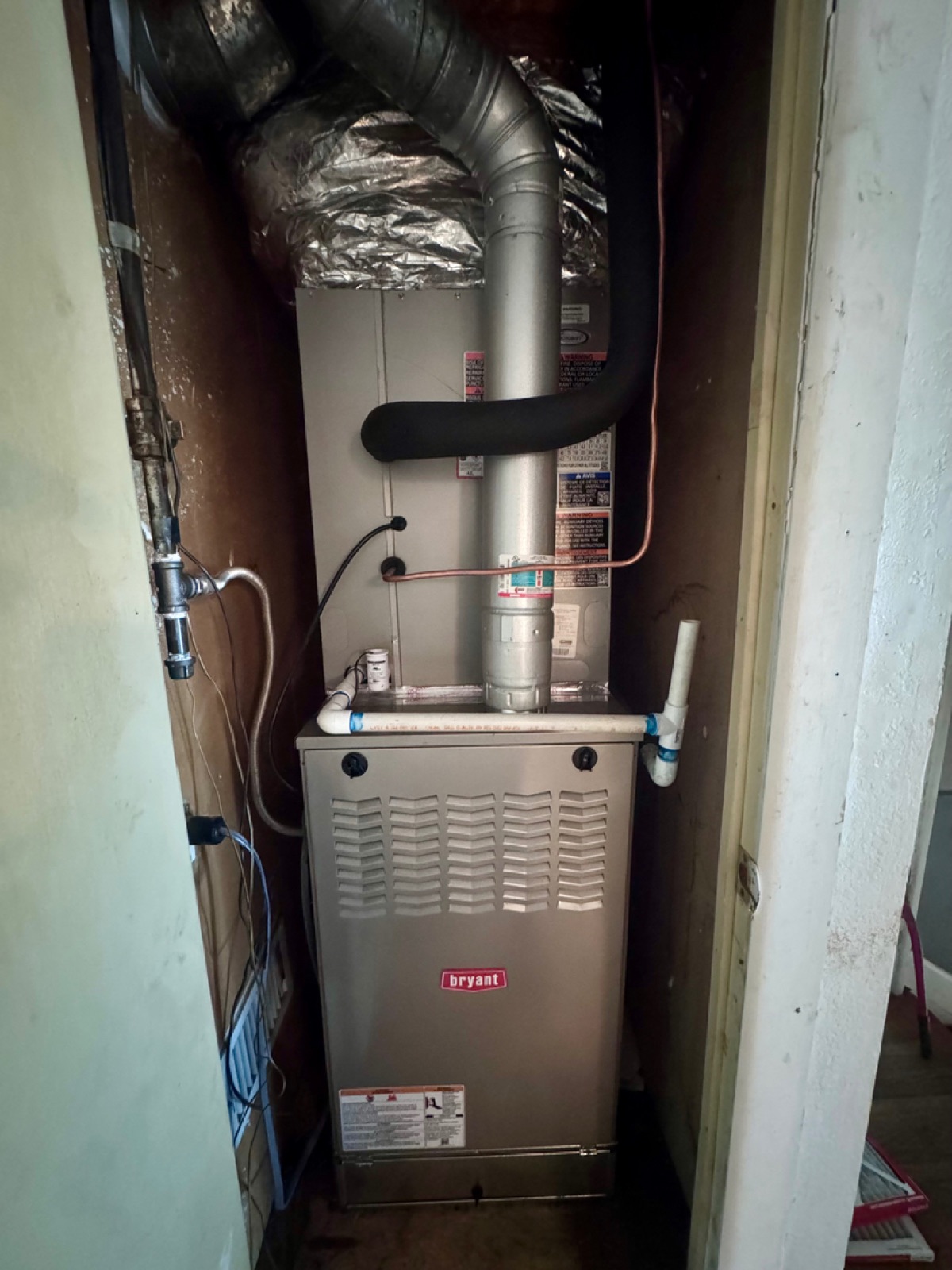
A short cool draft at startup can be normal. Air already sitting in the ducts has to move before heated air reaches the vents. Cold air that continues for several minutes—or a house that never reaches the set temperature—is a problem.
Stop and get help if you notice a safety warning
Leave the home and call 911 or the gas utility from a safe location if you smell gas. Do not operate switches, use a flame, or try to find the leak. If a carbon monoxide alarm sounds, move everyone—including pets—into fresh air and call 911.
Turn the furnace off and call for service if you see soot, notice a yellow or unstable burner flame, smell hot wiring or melting plastic, or hear a boom at ignition. Do not remove burner panels or bypass a safety switch.
Four safe checks before you call
1. Set the thermostat correctly
Select Heat, raise the setpoint a few degrees above room temperature, and set the fan to Auto. A fan set to On can circulate unheated air between heating cycles. If the thermostat uses batteries and its display is weak or blank, install the specified replacements.
2. Inspect the return-air filter
A packed filter can restrict airflow until the furnace overheats and its high-limit control shuts the burners off while the blower keeps running. Replace a dirty filter with the correct size and airflow direction. Do not run the system without one.
3. Check accessible vents
Open supply registers and make sure furniture, rugs, or boxes are not blocking return grilles. Closing many registers does not save energy; it can create airflow and pressure problems.
4. Check the electrical switch once
Make sure the furnace service switch has not been bumped off. Check the labeled breaker, but reset a tripped breaker only once. If it trips again, leave it off and call—repeated resetting can conceal an electrical fault.
If those checks do not work, the pattern matters
Warm at first, then cold
This often points to overheating from restricted airflow, a blower problem, or a high-limit fault. The burner shuts down for protection while the fan continues carrying cooler air.
The blower runs, but the burners never light
An igniter, flame sensor, gas valve, pressure switch, venting condition, or control fault may prevent ignition. These components require proper testing; cleaning or adjusting combustion equipment is not a safe homeowner repair.
Only some rooms feel cold
Uneven comfort can involve duct leakage, disconnected or crushed ductwork, poor balancing, or insulation—not necessarily the furnace itself. Note which rooms are affected so the technician can diagnose the whole air-delivery path.
The furnace starts and stops repeatedly
Rapid short cycling can come from overheating, controls, or sizing issues. Turn the system off if cycles repeatedly fail to produce heat. Our guide to furnace warning signs explains other clues worth noting.
Why the first Big Country cold snap exposes problems
Heating systems around Abilene may sit mostly idle through long mild stretches. When a cold front arrives, the furnace suddenly has to run longer. A marginal igniter, dirty filter, weak motor, or overdue maintenance that went unnoticed in fall can show up all at once. Testing the heat before you depend on it gives you time to address a fault without waiting in a cold house.
When it is time for furnace repair
Request heating and furnace repair in Abilene when the basic checks do not restore steady warm airflow, the system repeatedly locks out, a breaker trips twice, or the temperature continues falling. If the furnace will not start at all, use our separate furnace won’t turn on checklist. Preventive inspection before the first freeze belongs on the furnace maintenance page.
Frequently asked questions
Why does my furnace blow cold air before it gets warm?
A brief cool draft can be normal while the furnace warms and previously cooled air clears the ducts. If the air stays cold for several minutes or the home never warms, check the thermostat and filter, then schedule a diagnosis.
Should I turn off a furnace that is blowing cold air?
Turn it off immediately if you smell gas or electrical burning, hear a carbon monoxide alarm, see soot, or notice a yellow or unstable burner flame. Otherwise, you can check the thermostat and filter once, but repeated failed heating cycles need professional service.
Still getting cold air?
Wright Choice diagnoses heating problems for Abilene and nearby Big Country homes.